Talk to EASTONTECH
We want to help you find the best option for your business. Tell us your need by filling out the form below and we will contact you as soon as possible!

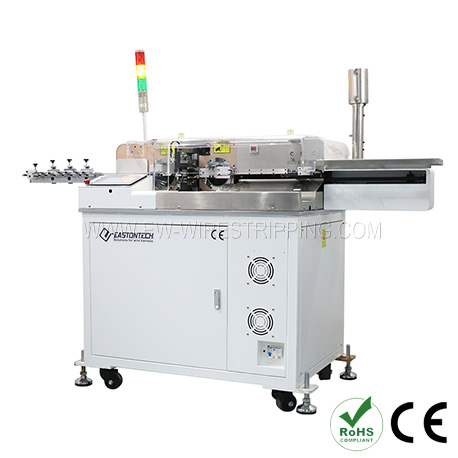
| Model | EW-22F |
| Wire range | AWG32-AWG16 |
| Stripping length | 0-20mm |
| Cut precision | ±(1+0.02*L) mm |
| Cutting length | 10-600mm (600-1500 can be customized) |
| Twisting length | 3-20mm |
| The min. cutting length with double side tinning | 11mm |
| Capacity | 9000-11000pcs/hour (AWG22-AWG32, 1-8 wires one time) 4000-5500pcs/hour(AWG20-AWG18, 1-5 wires one time) 2700-3000pcs/hour(AWG18-AWG16,1-3 wires one time) |
| Power | 220V/110V/50/60HZ |
| Air pressure | 0.5-0.7Mpa |
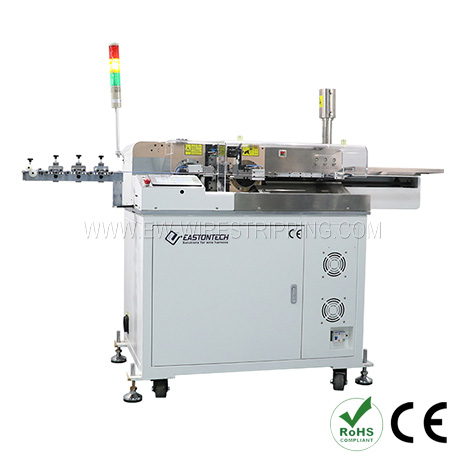
| Machine size | 1210*770*1380mm |
| Weight | 430Kg |
| Options | CCD visual Inspection; CFM |
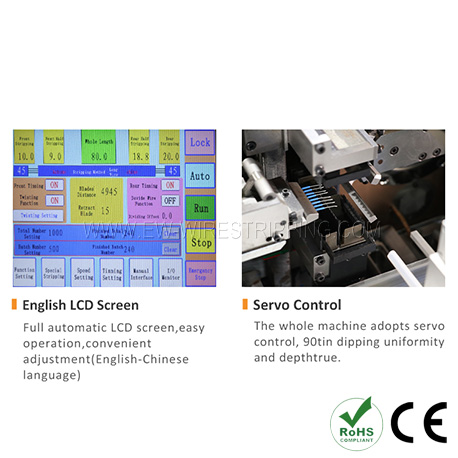
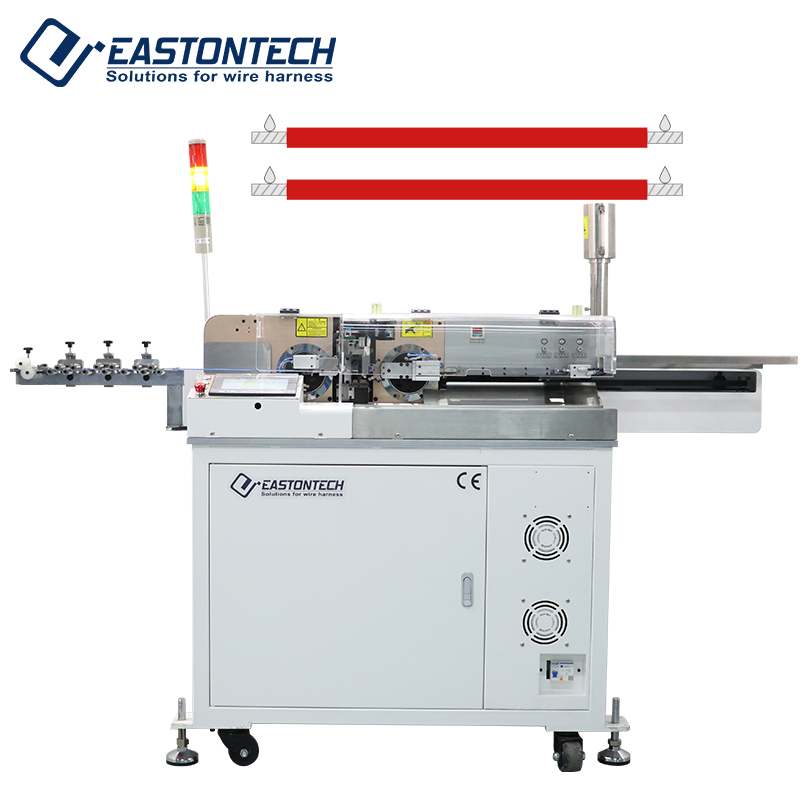
A premium wire tinning machine must bridge the gap between high-velocity feeding and thermal stability. In high-density wire harness processing, the integration of an automatic wire soldering machine with a lead-free solder pot and titanium alloy coating ensures optimal tin dipping depth without triggering insulation melt-back. Driven by synchronized servo motors, our equipment guarantees zero-defect stranded wire twisting and tinning performance across micro-electronics and automotive circuits.
● Massive Parallel 8-Wire Throughput:Engineered with an ultra-wide synchronized wire feeding track capable of running 1 to 8 lines concurrently. Delivers an industrial-grade output scaling up to 11,000 pieces per hour, making it the ultimate solution for high-volume consumer electronics looms.
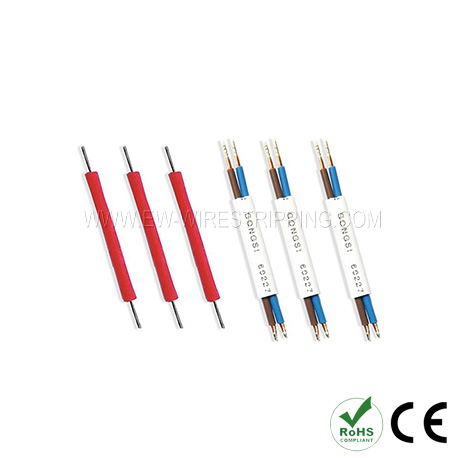
● Micro 11mm Ultra-Short Tinning Boundary:Breaks traditional mechanical limits by reliably executing flawless dual-ended insulation stripping, high-uniformity twisting, and double-side solder dipping on micro-jumpers as short as 11 mm.
● Tier-1 Global Component Core: Driven entirely by high-precision Mitsubishi servo motor networks and SMC pneumatic cylinders, ensuring micron-level linear positioning repeatability and smooth mechanical kinematics under 24/7 heavy shifts.
● Versatile Multi-Step Strip Configurations:Advanced microprocessor architecture seamlessly executes full stripping, partial back-stripping, middle windows opening, and precise localized twisting across an expansive AWG 32 to AWG 16 wire spectrum.
● Automotive-Grade Inspection Readiness: The physical control chassis and software framework are pre-engineered to seamlessly accept optional CCD Visual Image Inspections and CFM (Crimp Force Monitoring) arrays for high-spec data cable sorting.
● OSHA-Compliant Eco Working Cell:Outfitted with an automatic motorized solder wire replenishment system feeding directly into the pot, coupled with an integrated high-vacuum soldering smoke eater to neutralize flux fumes instantly for operator wellness.
● Smart Devices & Wearable Micro-Jumpers:Mass production of ultra-short internal battery leads, acoustic earphone cables, and flexible display ribbon jumpers requiring pristine double-sided tinning down to 11mm profiles.
● Automotive Electronic Hubs & Sensor Loops: High-velocity manufacturing of multi-circuit sensor arrays, dashboard cluster grids, and CAN bus interconnects across Mexico, Europe, and Asia.
● White Goods & Appliance Wire Harnesses:Rapid processing of multi-color internal board-to-board control line jumpers for smart washing machines, HVAC systems, and consumer power arrays.
Q1: What factors differentiate a high-quality automatic wire tinning machine from standard soldering tools?
A: A professional automated system ensures that high-volume production does not sacrifice wire integrity. Standard tools often cause uneven solder thickness or damaged insulation jackets due to manual handling variations. An advanced industrial wire tinning machine automates the entire linear synchronization including stripping, immediate mechanical core twisting, and micro-adjustable dipping timers. This eliminates the risk of stranded copper cores expanding or fanning out before making contact with the liquid solder.
Q2: How does a wire twisting and tinning machine prevent thermal damage to thin cable insulation?
A: When processing fine wires such as AWG 28 to AWG 32, exposure to hot solder baths can easily melt or warp thin-walled jackets. To solve this engineering bottleneck, top-tier machinery utilizes a dual-axis servo movement profile alongside constant temperature titanium pots. The system controls the vertical descent and exit speeds down to milliseconds, allowing the bare copper core to achieve a gastight solder bond while keeping the insulated jacket away from excessive ambient heat.
Q3: Can an automatic wire soldering machine process multiple wire strands simultaneously to increase factory throughput?
A: Yes, multi-line parallel tracking is the industry standard for maximizing return on investment. High-performance models feature an expanded intake rail block driven by centralized servo controllers that pull, cut, and process up to eight wires perfectly in parallel. This methodology allows the system to deliver an aggregate output exceeding ten thousand completed pieces per hour, making it highly competitive for contract electronics assembly plants.
Q4: What are the maintenance guidelines for keeping the lead free solder pot running cleanly over long shifts?
A: Lead-free soldering alloys oxidize at a faster rate compared to traditional mixtures, creating a layer of dark tin dross on the surface of the bath. If left unattended, this slag will coat incoming wire tips and cause weak, non-conductive cold joints. To maintain continuous quality, the machine must incorporate a automated pneumatic scraper mechanism that wipes the molten surface clear before each dipping action, coupled with weekly cleanings of the internal pot walls.
Talk to EASTONTECH
We want to help you find the best option for your business. Tell us your need by filling out the form below and we will contact you as soon as possible!